
JKA Philippines Crowns its 2026 International Champtions in Davao
Four-day international gathering closes with championship victories, Japanese master instruction and growing global interest in Philippine Karate-Do
 Tomas Kauer - Senior News Editor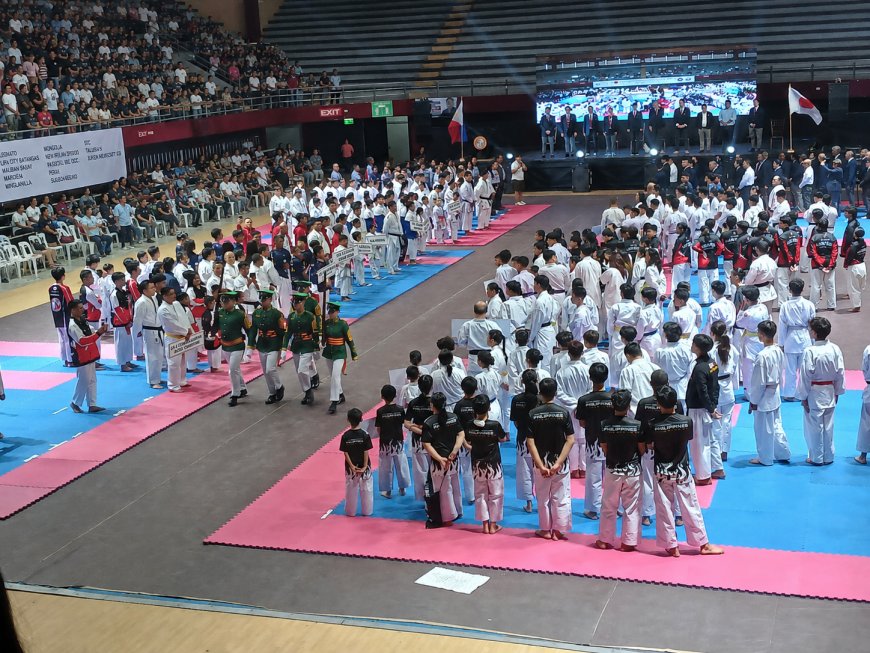
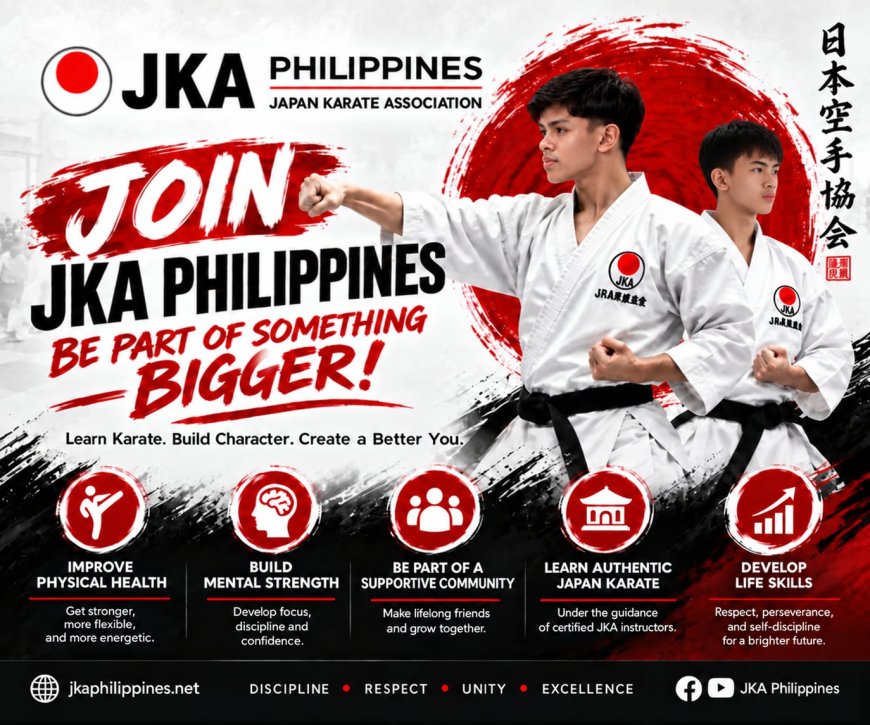
August 30, 2026 | Davao City, Philippines — The 3rd JKA Philippines International Gasshuku & Karate-Do Championship 2026 came to a close Sunday in Davao City, ending four days of intensive training, international competition and high-level Karate-Do instruction at the University of Southeastern Philippines (USeP).
The August 27 to 30 gathering brought together Japanese masters, international delegations, senior black belts, instructors and competitors from the Philippines and abroad, culminating in the crowning of the 2026 JKA Philippines International Karate-Do Champions in their respective divisions.
The final day featured championship contests in Individual Kata, Individual Kumite, Team Kata and Team Kumite, with competitors battling through technical, tactical and mental challenges before the awarding and closing ceremonies.
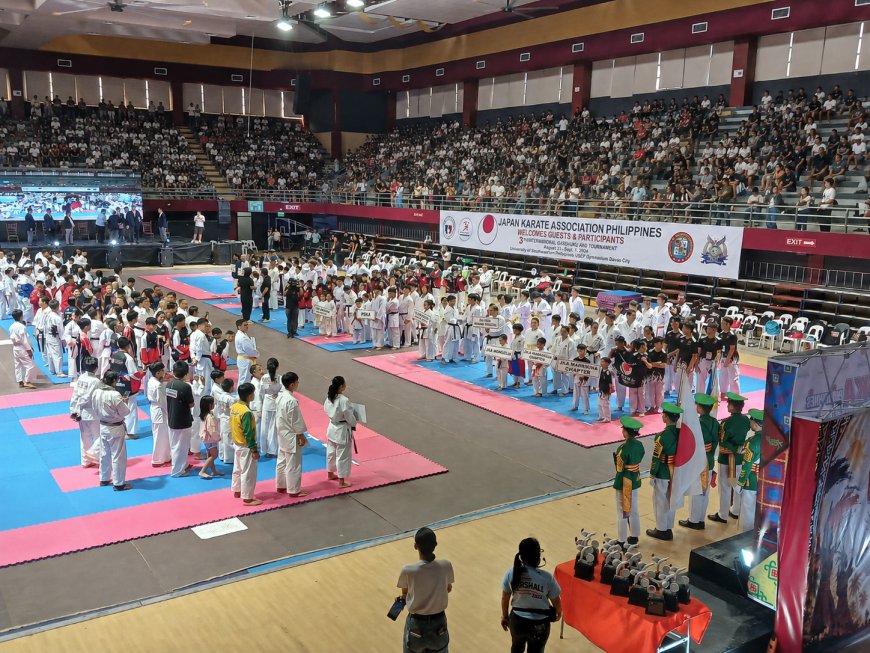
For JKA Philippines, the event represented more than the conclusion of another tournament.
It marked another step in positioning the Philippines as an increasingly visible destination for international traditional Karate-Do.
CHAMPIONS EMERGE AFTER FOUR DAYS OF COMPETITION
The championship rounds tested competitors in two of traditional karate's most important disciplines.
In Kata, athletes were evaluated on technical precision, power, balance, rhythm, focus and execution.
In Kumite, competitors relied on timing, distance, speed, judgment and the ability to read an opponent under pressure.
The tournament's winners earned the distinction of becoming champions of the 3rd JKA Philippines International Karate-Do Championship 2026 in their respective categories.
The final results reflected years of preparation rather than a single weekend of competition.
Behind every medal were countless hours of practice, repetition, correction and discipline.
JAPANESE MASTERS LEAD INTERNATIONAL GASSHUKU
A major feature of the event was the participation of distinguished instructors from Japan, including Koichiro Okuma, Shihan; Tatsuya Naka, Shihan; and Koji Chubachi, Sensei.
Their presence allowed Filipino and international practitioners to receive direct instruction from senior representatives of the Japan Karate Association tradition.
Training sessions focused on Kihon, Kata and Kumite, together with timing, distance, technique, mental preparation and advanced competition strategy.
For many participants, particularly younger karateka, the opportunity to train directly with senior Japanese instructors was considered one of the most valuable experiences of the four-day gathering.
JAPAN CONSUL-GENERAL ADDRESSES KARATE COMMUNITY
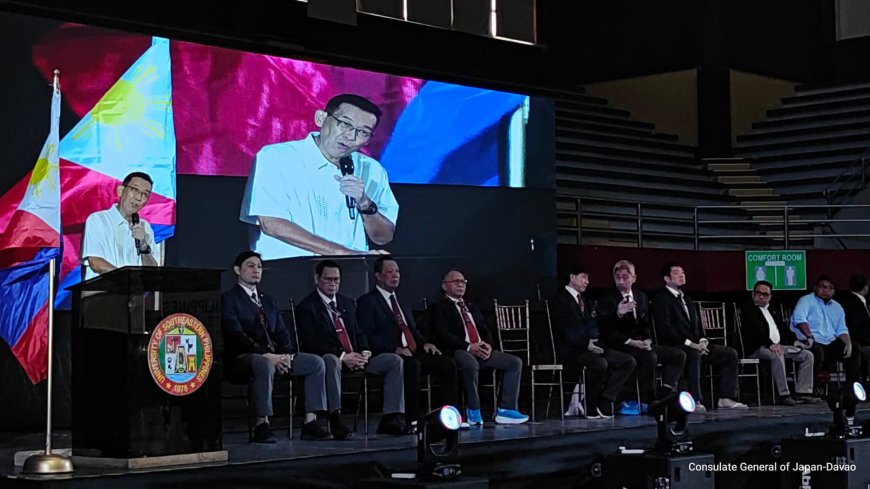
ONO Hirotaka, Consul-General of Japan in Davao, also addressed the gathering and delivered an inspiring message to athletes, instructors, officials and international delegates.
His presence added a diplomatic and cultural dimension to the event, highlighting the long-standing relationship between Japan and the Philippines and the role of Karate-Do in strengthening people-to-people ties.
The message resonated with a crowd representing different generations and nationalities, united through a martial art rooted in Japanese discipline and tradition.
The championship demonstrated how sport can extend beyond competition and become a platform for cultural exchange and international friendship.
DAVAO SPORTS LEADERSHIP SUPPORTS EVENT
Also present in the broader sports leadership surrounding the international gathering was Michael Denton P. Aportadera, Head of the Davao City Sports Development Division.
The participation of Davao's sports officials reinforced the city's commitment to athlete development and to hosting large-scale national and international sporting events.
The championship was supported by the Kadayawan Festival, Philippine Sports Commission and University of Southeastern Philippines, bringing together government, education, sports development and international cooperation.
The event also provided Davao with another opportunity to showcase its capacity to host visiting athletes, officials and international delegations.
INDONESIA AND MONGOLIA ADD INTERNATIONAL COMPETITION
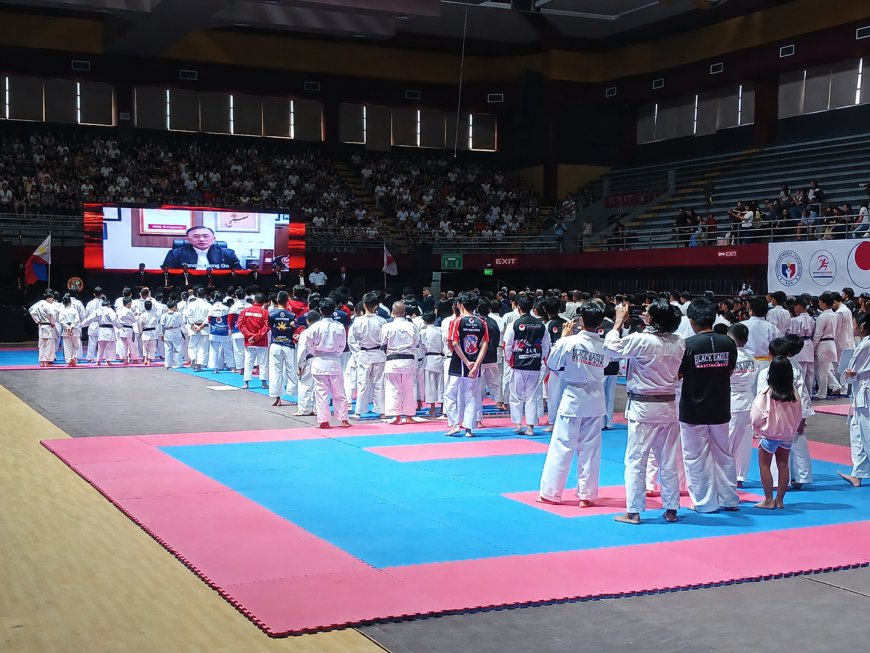
International participation gave the tournament an added competitive edge, with teams and representatives from Indonesia and Mongolia among those drawing attention during the championship.
Their presence offered Filipino competitors the opportunity to measure their skills against international practitioners and experience different styles and competitive approaches within traditional Karate-Do.
The gathering of senior black belts from different backgrounds also underscored the international character of the event.
Despite the intensity of competition, matches were marked by the traditional bow of respect before and after encounters, reinforcing one of Karate-Do's central principles: strong competition does not eliminate mutual respect.
EUROPEAN INTEREST GROWS
Interest in the Davao event has also extended beyond Asia.
Karate and business circles connected with Switzerland, the Czech Republic, Germany and Spain have been monitoring the development of the JKA Philippines international gathering.
The growing attention has raised the possibility that future editions could attract broader European participation.
Such expansion could further strengthen the Philippines' position as an international meeting point for traditional Karate-Do practitioners from Asia and Europe.
YSMAEL YU BRINGS MILITARY AND POLICE LEADERSHIP TO JKA PHILIPPINES
Among the senior figures supporting JKA Philippines is Ysmael Yu, Sensei, Consultant to the Chairman.
Yu is a graduate of the Philippine Military Academy, Tanglaw-Diwa Class of 1992, and a retired Police Brigadier General of the Philippine National Police.
His experience in military education, senior police leadership and Karate-Do brings a distinctive perspective to the organization.
As Consultant to JKA Philippines Chairman Gilieto A. Luaque, Shihan, Yu contributes leadership experience grounded in discipline, organization, service and responsibility.
Those same values closely reflect the principles repeatedly emphasized throughout the international Gasshuku and championship.
SECURITY KEPT ON HEIGHTENED ALERT
Security and public safety remained an important part of the four-day international gathering because of the presence of foreign delegates, Japanese masters, black belts, officials, athletes and spectators.
A coordinated security and public-safety structure was maintained throughout the event.
Rodeno L. Dilag, Chairman of the Committee on Public Safety, helped lead the event's safety coordination, supported by members of the JKA Philippines public-safety team, including Engr. Romeo Chavez.
The broader security arrangements involved coordination with Davao security components, military support and the University of Southeastern Philippines' security personnel.
Organizers said the arrangements were designed to maintain an orderly and secure environment throughout the international competition.
MORE THAN A TOURNAMENT
The Davao gathering began with training, examinations and technical instruction before shifting into elimination rounds and championship competition.
By the final day, the focus had moved from learning to performance.
But for many participants, the event's importance went beyond trophies.
The four-day gathering created opportunities for younger practitioners to train with Japanese masters, for Filipino competitors to face international opposition, and for delegations from different countries to build new relationships said Emeliano Murillo, CEO of JKA, Philippines.
It also demonstrated the growing ambition of JKA Philippines to establish a larger international presence in the years ahead.
THE FINAL BOW
As the awarding ceremony concluded and the final competitors left the tatami, the 3rd JKA Philippines International Gasshuku & Karate-Do Championship 2026 formally entered the organization's history.
The Japanese masters shared their technical knowledge.
International delegations raised the level of competition.
Filipino athletes stood alongside foreign competitors.
And new champions emerged.
For four days, Davao City became an important meeting ground for traditional Karate-Do.
The event may have ended with a final bow, but organizers and participants now look toward the next international gathering.
The trophies will remain as records of victory.
The lessons, discipline and friendships formed in Davao may endure much longer.
The final bow has been made. The champions have been crowned. And Philippine Karate-Do now looks to its next international chapter.