
1 weekend, 8 coastal sites, 2.3 metric tons of trash cleared: MPIF’s Shore It Up! drives nationwide marine cleanup
1 weekend, 8 coastal sites, 2.3 metric tons of trash cleared: MPIF’s Shore It Up! drives nationwide marine cleanup

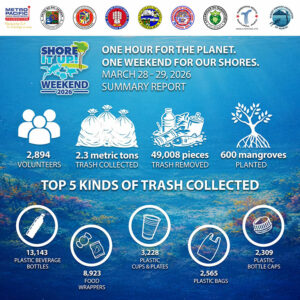
Metro Pacific Investments Foundation (MPIF), the corporate social responsibility arm of Metro Pacific Investments Corporation (MPIC), brought together a total of 2,894 volunteers, cleared 2.3 metric tons of marine litter, and planted 600 mangroves, in its biggest Shore It Up! Weekend yet — a nationwide annual marine conservation initiative that mobilized communities across eight partner sites: Del Carmen, Siargao; Alaminos, Pangasinan; Puerto Galera, Oriental Mindoro; Medina, Misamis Oriental; Cordova, Cebu; Marinduque; Mabini, Batangas; as well as partner organizations Tubbataha Reefs Management Office and the Resort Owners Association of Mabini, Batangas.

Celebrated every last weekend of March, Shore It Up! Weekend, now on its 18th year, is MPIF’s flagship coastal and marine conservation effort, anchored this year on the theme “One Hour for the Planet, One Weekend for Our Shores.” Across the country, communities carried out coordinated coastal and underwater cleanups alongside mangrove planting initiatives. As part of the weekend, participating sites also observed Earth Hour through local activities, complementing the broader call for environmental action.

MPIF President, Melody del Rosario joins volunteers in showing love for the shores of Del Carmen, Siargao.

Collective Action Across Communities

Underwater cleanup led by SIU partner, Resort Owners Association of Mabini (ROAM)

Marine Protection, Inspection and Conservation Guardians, together with Eco-guides from the Mangrove Protection Information Center and Mangrove Propagation and Information Center, were mobilized alongside hundreds of volunteers — including local residents, fisherfolk, students, youth groups, civic organizations, dive groups, and environmental advocates. Working closely with local government units and partners, they removed waste from both shorelines and nearshore waters. Across all sites, activities were designed based on local environmental needs and priorities.

Mangrove planting efforts in Alaminos, Pangasinan

From collection to disposal, all participating sites followed a systematic approach to waste management, with 2.3 metric tons of debris segregated and recorded. Plastic bottles, totaling 13,054 pieces, accounted for the largest share of collected waste, followed by food wrappers, plastic cups and plates, plastic bags, and plastic bottle caps. Marine litter was sorted, documented, and turned over to proper channels through local waste management systems and partner agencies. This ensured that cleanup efforts were not only immediate but complete, leaving sites clean, restored, and responsibly managed end-to-end.

“This weekend showed what sustained, collective action can look like when communities come together for a shared purpose. Across our partner sites, we saw people take ownership of their coastal spaces — not just by removing waste, but by being part of a larger effort to protect and preserve them,” said MPIF President Melody del Rosario. “Shore It Up! has always been about working alongside communities, and this year’s turnout and results reflect how that shared responsibility continues to grow.”

Volunteers work together to clear coastal areas in Cordova, Cebu.

Community-Led Initiatives Across Sites

Across participating locations, local government units and communities extended the impact of Shore It Up! Weekend beyond its core activities through locally driven initiatives aligned with their approach to environmental stewardship. In Del Carmen, Siargao and Puerto Galera, activities included the opening and blessing of mangrove nurseries, supporting ongoing coastal restoration efforts. Del Carmen also brought together the community through festivities highlighting sustainable fashion and cultural expression.

Marine debris collected by ROAM during an underwater cleanup

In Marinduque, the observance of Earth Hour took on a more reflective tone through a candlelight commitment wall titled “Beyond Earth Hour: What Will I Change?” held at the provincial capitol grounds, followed the next day by the turnover of environmental support materials, including metal waste bins donated to barangay councils. Meanwhile, in Cordova, Cebu, local government offices, including the Public Information Office and tourism office, participated in a coordinated lights-off initiative during Earth Hour, highlighting the role of institutions in promoting environmental responsibility.

Volunteers sort and segregate collected waste along the shores of Tubbataha.

Beyond the Weekend: Turning Action into Lasting Impact

While the impact of Shore It Up! Weekend is visible in the volume of waste removed, its value extends beyond the cleanup itself. Global studies continue to highlight the scale and persistence of marine litter, particularly plastics, and the need for coordinated action from source to sea. At the community level, initiatives like Shore It Up! help translate awareness into participation, demonstrating how collective, localized efforts can contribute to broader environmental outcomes.

By working closely with coastal communities and local partners, MPIF continues to strengthen the foundation for sustained marine conservation. Through Shore It Up!, the Foundation supports not only immediate environmental restoration but also the long-term goal of protecting biodiversity, sustaining livelihoods, and encouraging responsible stewardship of the country’s coastal resources.

Driving Impact Across the Sustainable Development Goals

Community volunteers gather in Puerto Galera for the coastal cleanup initiative.

Aligned with Gabay Kalikasan, one of the MVP Group’s Gabay Advocacies for a Sustainable Philippines, Shore It Up! actively supports these United Nations Sustainable Development Goals through its integrated, community-driven approach to environmental conservation.

Shore It Up! Weekend demonstrates how a single, coordinated initiative can advance multiple Sustainable Development Goals in tandem. By mobilizing communities to manage waste and protect shared spaces, the initiative contributes to more sustainable and resilient communities (SDG 11), while its focus on coastal and marine protection supports life below water (SDG 14).

Volunteers from ROAM Mabini following an underwater cleanup effort

Mangrove planting and ecosystem restoration efforts further strengthen life on land (SDG 15) and enhance natural defenses against climate risks (SDG 13). Central to these efforts is the collaboration among local governments, communities, and partner organizations, highlighting the role of partnerships (SDG 17) in driving long-term environmental impact.


Spotlight is BusinessWorld’s sponsored section that allows advertisers to amplify their brand and connect with BusinessWorld’s audience by publishing their stories on the BusinessWorld Web site. For more information, send an email to online@bworldonline.com.

Join us on Viber at https://bit.ly/3hv6bLA to get more updates and subscribe to BusinessWorld’s titles and get exclusive content through www.bworld-x.com.